
《The Legend of Rosy Clouds》What is the original novel called?Adaptation source and plot differences
Recently, we have been concerned about - The Legend of Rosy Clouds - what is the original novel called?Discussions about the source of the adaptation and plot differences have also continued.Regarding this topic, the public is also concerned about aspects such as plot setting, actor performance, special effects production, etc.Based on these, the editor specially came to have an in-depth discussion with you and show the essence of this drama.
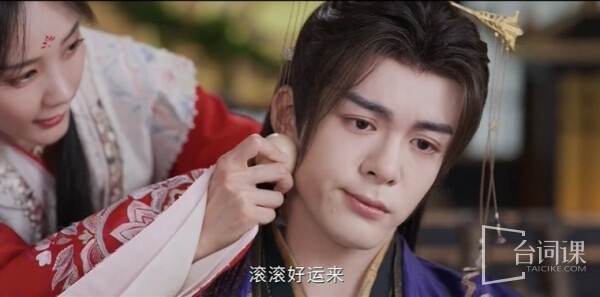
《The Legend of Rosy Clouds》What is the original novel called?Adaptation source and plot differences
《The Legend of Rosy Clouds》 is adapted from 《The Story of Rosy Clouds》.The drama version does not directly use the names and settings of the original characters, but puts the story into the fictional background of Nine Cities, and the main characters become Fan Yun and Qi Zheng.In the original work, the core qualities of women entering officialdom, ideal governance, and growth in the palace and court are transformed into the story of Fan Yun entering the Qi Mansion, participating in the affairs of the Nine Cities, and promoting changes in the selection and governance of the city.
The core charm of the original work - The Story of Saiunkuni - is that the heroine breaks through gender restrictions and embarks on an official career in a patriarchal order based on her ability.The TV version《The Legend of Rosy Clouds》keeps this direction.Fan Yun doesn't want to just stay as a famous girl, the wife of a city lord or a private school teacher. She wants to be someone who can really change reality.In the play, women are not allowed to participate in the selection test, and other plots put the theme of women entering officialdom in the original work into a more intuitive conflict between the Nine Cities system.
The character names are the most obvious difference.The protagonists of the drama version are Fan Yun and Qi Zheng, and the story revolves around the relationship between the Nine Cities City Lord's Mansion, the Zheng family, the Wei family, and the Fan family.Names such as Hong Xiuli and Zi Liuhui that were common in character relationships in the old version are no longer used as direct narrative names in the drama version.When viewers watch the TV series, they should follow the drama characters such as Fan Yun, Qi Zheng, Lou Qiyan, and Zheng Shi.
The plot structure has also been significantly reorganized.The original work has a stronger palace color, while the drama version puts more emphasis on the local governance of the nine cities, people's livelihood issues and the family power game.Fan Yun enters the Qi Mansion and becomes the wife of the city lord, which is not only a marriage setting, but also the entrance to the power center of the Nine Cities.Qi Zheng used disguise, testing and layout to fight against the old ministers and family forces. The cooperation between the two loosened the old order in the Nine Cities.
The presentation of the emotional line is also more in line with the rhythm of the series.Fan Yun and Qi Zheng did not completely trust each other from the beginning. They started from the contractual relationship and misunderstanding of identity, and gradually got closer through poisoning, tax system, private school, selection test, Lingxian Cult, mutiny and other incidents.The drama version writes love into the process of working together. The sweetness comes from supporting each other and dealing with each other side by side, rather than relying solely on confession or misunderstanding.
The line between Lou Qiyan and Zheng Shi is an important source of plot and emotional complexity in the drama.He is not only a businessman, but also responsible for the Zheng family; he has an admiring relationship with Fan Yun, but also competes with and contrasts with Qi Zheng.This character makes the story not only stop at the relationship between the male and female protagonists, but also bring out family interests, personal choices and the pressure of the old system.
Fan Yun's character growth is more focused on Nine Cities affairs than the theme of the original work.She teaches, looks after people's livelihood, participates in selection examinations, checks dirty money, saves people, and makes choices in critical moments many times.Her ideals are not abstract slogans, but are connected to specific events such as taxes, private schools, officials, disasters, and mutinies.The drama version uses these events to let the audience see why Fan Yun can become the person who changes Nine Cities.
The focus of Qi Zheng's adaptation is to grow from a city lord who is restrained by the old forces to a person who can truly take on the future of Nine Cities.He needs Fan Yun to provide a civilian perspective, and he also needs to hold the bottom line under the pressure of Zheng Yuan, Zheng Tao and other old clans.The growth of the king in the original book is transformed into the city master's control of the city in the drama version.Power is no longer just a symbol in the palace, but lies in whether the people of Nine Cities can live a better life.
The relationship between the drama version and the original work can be summarized as retaining the core themes and rewriting the characters and events.What remains is female growth, ideal governance, power order and emotional companionship; what has changed significantly are the character names, local background, branch structure and specific plots.Readers of the original work can see the familiar spiritual core, and viewers of the drama version can also follow it as an independent Nine Cities story.
《The Legend of Rosy Clouds》The most noteworthy adaptation point is that it changes the theme of “women entering the officialdom” from a legendary setting to something that Fan Yun does one by one.She was not suddenly recognized because of her special status, but she proved her judgment, responsibility and execution ability in crisis after crisis.Characters such as Qi Zheng, Lou Qiyan, Gao Ran, and Wei Shisan changed around her, which also made the adapted story closer to the growth of the group.Audiences who like the temperament of "The Story of Caiyun Country" can regard the drama version as a new expression after localization and film and television.
The above is all the content. We are committed to providing the audience with the latest and most complete analysis and introduction of film and television plots. If necessary, you can continue to follow us in the days to come. We will continue to bring you more exciting content.
Website Disclaimer: The content of “《The Legend of Rosy Clouds》What is the original novel called?Adaptation source and plot differences” on this site is provided by user "QuasarQuester" and is for display purposes only. Copyright belongs to the original author. If your rights have been infringed, please contact us, and we will remove it as soon as possible.
- 1 Recommendation of good male short dramas
- 2 “Southern Hemisphere”Internet memes explained
- 3 《了不起啊朋友》开播:21岁外卖员重返柔道赛场,为弟弟筹5万元手术费
- 4 《假日循环》发布预告:麦迪·齐格勒反复过圣诞,12月2日上线Netflix
- 5 《in the name of the brother》release special episode
- 6 《yudanqiu》Scheduled for October 12, Cheng Lei and Xu Ruohan are caught in a troubled situation
- 7 Zhang Jingyi appeared in high-definition clothes - Reborn - press conference
- 8 《The Princess Royal》Restart the lives of the two heroes and change their quarrels.
- 9 “ letter circle brat” Internet memes explanation
- 10 “Brain circuit”Explanation of Internet memes
- 11 《亚森·罗宾》(Lupin)第四部10月23日上线,奥马尔·希谈回归与高强度拍摄
- 12 “I clicked”Internet memes explained
- 13 100 great short plays
- 14 《Love and Deep Space》Character Introduction
- 15 《Douyin》Introduction to Ma Sichun’s smiling memes